Gramps in Tools: A Practical Embroidery Review
First Impressions: Friendly, Nostalgic, and Just Right for Dad
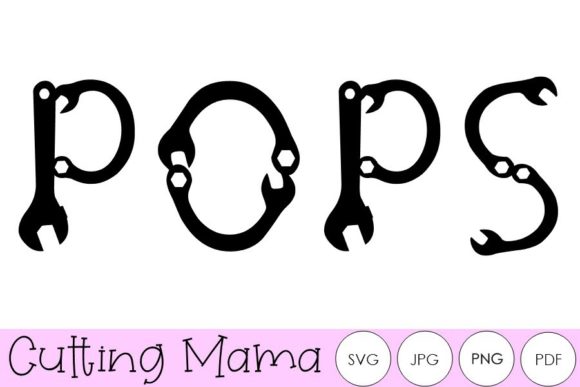
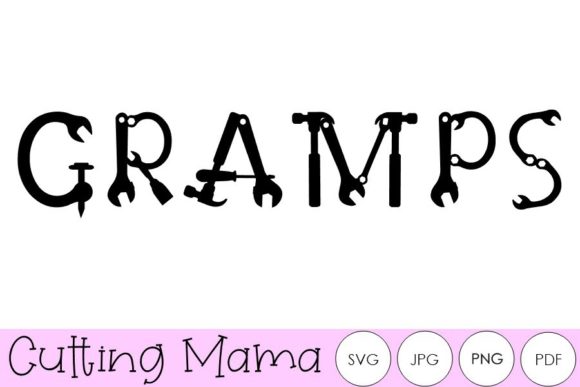
When I opened Gramps in Tools, my first thought wasn’t “cute” or “trendy”—it was “real.” The name “Gramps” spelled out in wrenches, hammers, and screwdrivers lands with warmth and quiet confidence. It’s not overly detailed or fussy—no tiny rivets or shaded gradients—but it carries clear personality: grounded, hands-on, affectionate. As a designer who’s stitched hundreds of personalized gifts, I immediately pictured this on a heavyweight cotton tote bag for Father’s Day—something sturdy enough to hold tools *and* feel meaningful when handed over at brunch.
Where It Shines: Real Projects, Real People
Gramps in Tools fits naturally into small-batch craft business workflows. I tested it as a chest embroidery on a midweight unisex sweatshirt—no appliqué, just clean satin and fill stitch—and the rhythm of the tool shapes gave the lettering subtle movement without sacrificing legibility. It worked equally well scaled down (3.5”) on a baby onesie pocket and up (5.2”) as a center motif on a linen tea towel. For Etsy sellers, that versatility is gold: one machine embroidery design can support multiple product listings—tote bags, aprons, pillow covers, even embroidered patches for craft fair booths—without needing redesign or redraw.
What stood out most was how it reads at arm’s length. On a crowded market table or a digital thumbnail, Gramps in Tools doesn’t get lost in background noise. The bold silhouette of each tool creates natural negative space, helping the word “Gramps” pop—even on dark fabric. That matters for handmade product presentation: customers don’t squint at your mockups, and they shouldn’t have to squint at your finished product.
Where to Pause—and Why
This isn’t a design for ultra-fine detail work. If you’re stitching on thin jersey or stretchy performance fabric, keep stabilizer front-of-mind: the tool outlines rely on crisp satin stitch edges, and any fabric shift will soften their impact. I’d avoid using Gramps in Tools on curved surfaces like caps unless you’ve confirmed the file includes underlay or has been optimized for low-profile hoops—some versions of this theme can bunch at the top of the “G” or bottom of the “S” if tension isn’t dialed in.
Also worth noting: while the design reads clearly at 4” and above, don’t push it below 3”. The smallest tool elements—the tip of the screwdriver, the curve of the wrench jaw—start to lose definition. That makes it less ideal for tiny baby caps or delicate nursery decor where scale demands precision. And because it’s built around shape-based lettering rather than pure typography, avoid pairing it with other dense embroidery file accents nearby—it needs breathing room to land its message.
Stitch Density & Fabric Considerations
The fill areas are moderate—not sparse, not heavy—so it stitches cleanly on stable woven fabrics like twill, canvas, and medium-weight denim. But on textured surfaces (think terry cloth towels or bouclé knit), test first: some of the smaller tool cutouts may fill in unpredictably depending on thread weight and stabilizer combo. I used tear-away + light cut-away on a kitchen towel and got clean results; on a brushed cotton sweatshirt, I swapped to medium cut-away and added a topping—no puckering, no skipped stitches.
Commercial Use: Trust, Clarity, and Quiet Confidence
As someone who sells digital embroidery assets and also embroiders client gifts, I pay close attention to how a design builds trust. Gramps in Tools does that quietly: it feels intentional, not algorithm-generated. Customers recognize sincerity in craftsmanship—and this design delivers that through balance, proportion, and restraint. It doesn’t shout. It invites. That translates directly to giftability: a dad receiving a custom-embroidered apron with Gramps in Tools doesn’t just get a joke—he gets acknowledgment of his role, his hands, his presence.
For craft businesses, that emotional resonance supports pricing power. You’re not selling “a font on fabric”—you’re offering a story with stitch count to back it up. And because the motif leans into universal symbols (tools = care, making, legacy), it avoids dated trends or narrow humor. That means longer shelf life in your shop, fewer returns due to misinterpreted tone, and smoother integration into cohesive branding—say, alongside a matching “Nana in Teacups” or “Papa in Plaid” set.
Your Designer Checklist Before Stitching
- Test Gramps in Tools on scrap fabric that matches your final project’s weight and texture—especially if using dark thread on light fabric or vice versa.
- Check stitch density visually: zoom in on the file preview to confirm no overlapping or undersized fills in tight corners (like where the hammer head meets the handle).
- Confirm hoop size compatibility—this design likely fits comfortably in a 4x4 or larger hoop, but verify before loading.
- Review small details in black-and-white mockups: does the “P” still read as a “P” when reduced? Does the wrench outline hold up against busy fabric prints?
- Use proper stabilizer—light cut-away for knits, tear-away for stable wovens, and always float topping for napped or fuzzy surfaces.
- Double-check licensing: since this is listed as a Graphics file in the Crafts category, confirm whether commercial use (selling finished embroidered items or reselling the file) is permitted before listing on Etsy or at a craft fair.
Final Thought: Design With Purpose, Not Just Pixels
Gramps in Tools won’t win awards for technical complexity—but it doesn’t need to. Its strength lies in clarity, warmth, and real-world fit. It’s the kind of digital embroidery file that makes a customer pause mid-scroll, smile, and click “add to cart.” For small shop owners and creative entrepreneurs, that’s not just convenience—it’s connection. Stitch it thoughtfully, pair it with honest materials, and let the tools do the talking. Because sometimes, the best designs aren’t the flashiest—they’re the ones that feel like home.