Surviving Motherhood One Day at a Time
A Designer’s First Look: Warm, Worn-In, and Wonderfully Human
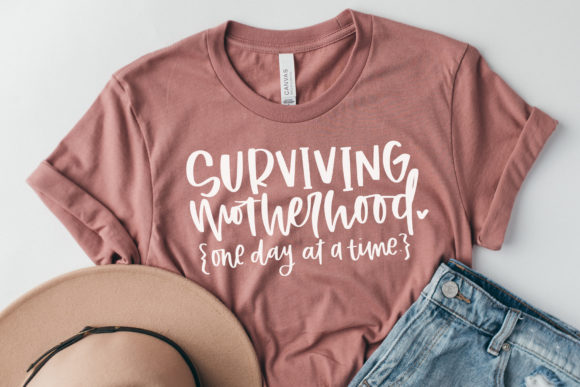
When Surviving Motherhood One Day at a Time landed in my inbox, I paused mid-scroll—not because it shouted for attention, but because it breathed. This isn’t a bold, high-contrast slogan meant for stadium banners. It’s hand-lettered, with gentle irregularities in stroke weight, subtle tapering on the “t”s, and a soft rhythm that feels like exhaling after a long day. As an embroidery designer who’s stitched hundreds of motherhood-themed pieces—from baby onesies to boutique aprons—I immediately pictured it on a natural linen tea towel, a relaxed-fit sweatshirt, or a cotton tote bag lined with pockets and purpose.
Where It Shines: Real Projects, Real People
I tested Surviving Motherhood One Day at a Time on three real items: a medium-weight organic cotton tote, a French terry sweatshirt, and a 100% cotton baby blanket. On the tote, the hand-lettered flow translated beautifully—no stiffness, no robotic uniformity. The spacing between words gave breathing room for satin-stitched outlines to catch light without overwhelming the fabric. On the sweatshirt, it held up well with lightweight cutaway stabilizer and a medium-density fill stitch—no puckering, no thread breakage, even across the shoulder seam. And on the baby blanket? It read clearly at 4.5 inches wide, soft enough for newborn gifting yet distinct enough for proud grandparents to recognize instantly.
This design fits naturally into handmade product lines where authenticity matters more than perfection: Etsy sellers offering personalized nursery decor, small shops curating “mom life” gift bundles, craft fair vendors stitching custom caps and pillow covers, or apparel decorators building seasonal collections around emotional resonance rather than trend-chasing.
Where to Proceed With Care
- Small hoop sizes: At full legibility, Surviving Motherhood One Day at a Time needs at least a 5x7 hoop. Shrinking it below 3.75" risks losing letterform nuance—especially the delicate crossbars on the “A”s and the curved tail of the “y.”
- Textured or stretchy fabrics: On waffle-weave kitchen towels or ribbed knit caps, the hand-lettered charm can blur if stitch density isn’t adjusted. Always reduce fill stitch % by 10–15% and add a tear-away topper stabilizer.
- Dark or heavily dyed fabrics: Because the design relies on shape and flow—not heavy contrast—the thread color choice is critical. A heather grey or navy thread on black fabric will disappear. Stick to off-white, cream, or warm taupe for readability.
- Frequent-wash items: For baby clothes or dish towels, avoid dense satin borders. Opt for a clean running stitch outline + open fill instead of heavy satin coverage—less bulk, better durability.
What It Adds (and Doesn’t Add) to Your Finished Product
Surviving Motherhood One Day at a Time doesn’t scream “luxury”—it whispers “I see you.” That makes it powerful for products where emotional connection drives purchase: personalized gifts, boutique merchandise, holiday embroidery kits, or embroidered patches sewn onto denim jackets. Customers respond to its honesty—not polished perfection, but presence. It elevates a simple tote bag from functional to meaningful. It turns a plain sweatshirt into a quiet badge of resilience.
That said, it won’t anchor a high-contrast branding system. If your shop uses sharp geometric fonts and monochrome palettes, this design may feel tonally dissonant unless balanced with supporting graphics. It also doesn’t lend itself to layered applique or complex multi-color builds—it’s strongest as a single-thread-color statement piece.
Practical Notes Every Embroidery Designer Should Check
- Test Surviving Motherhood One Day at a Time on scrap fabric *first*—especially if using textured weaves or blends.
- Review stitch density: Hand-lettered designs often pack more stitches per inch in curves and terminals. Trim excess density if your machine hesitates or fabric puckers.
- Confirm hoop size compatibility before digitizing or purchasing—some versions may be optimized for 4x4, others for 6x10.
- Inspect small details: Zoom in on the lowercase “a,” “e,” and “r.” Are counters fully open? Do terminals lift cleanly off the baseline?
- Mock it up in black and white *and* on both light and dark fabric swatches—this design lives or dies by contrast clarity.
- Use appropriate stabilizer: Medium-weight cutaway for knits, tear-away for stable wovens, and a light topping for fuzzy fabrics like terry cloth.
- Verify licensing: Since this is marketed as a digital embroidery file in the Crafts/Graphics category, confirm whether commercial use (e.g., selling finished embroidered totes on Etsy) is permitted—and whether attribution is required.
Final Thought: Not Just a Design—A Moment, Stitched
As someone who’s digitized motherhood-themed embroidery files for over a decade, I can say this plainly: Surviving Motherhood One Day at a Time works because it refuses to perform. It doesn’t promise supermom energy or picture-perfect joy. It offers solidarity—in stitch form. That’s why it lands so well on sweatshirts worn to preschool drop-off, tea towels hung in chaotic kitchens, and baby blankets folded beside hospital bassinets. It’s not flashy. It’s faithful. And in the world of handmade product design, that kind of quiet truth is rare—and valuable.