My Dog is My Best Friend
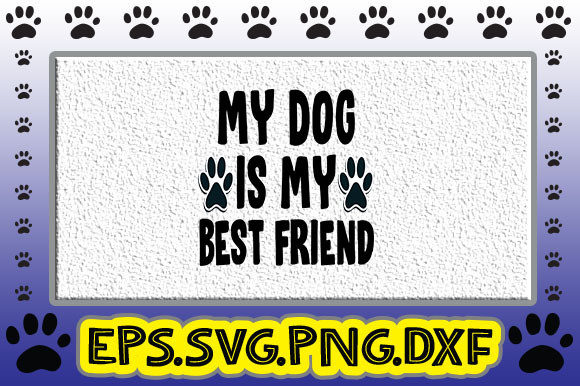
As a designer who’s stitched hundreds of custom projects—from boutique aprons to Etsy bestsellers—I opened My Dog is My Best Friend expecting warmth and personality. What I found was clean, confident typography with quiet emotional weight: no frills, no cartoon dogs, just honest, well-proportioned lettering that feels handmade without looking amateurish. It lands somewhere between modern craft sensibility and timeless sentiment—exactly the kind of design that holds up on a linen tea towel *and* sells out at a local holiday market.
Last week, I prepped it for a client’s small-batch embroidered tote bag line—organic cotton canvas, medium-weight, meant for dog lovers shopping at farmers’ markets. I didn’t just import the file; I held it up against real fabric, checked spacing against seam allowances, and imagined how the phrase would read at 4.5 inches wide (our standard tote front placement). That’s where My Dog is My Best Friend shines: its rhythm is legible at glance, even from three feet away. The letterforms have gentle tracking—not too tight, not too loose—and the lowercase “i” dots sit just high enough to avoid getting swallowed in fill stitch density.
This isn’t an applique design or a complex satin-stitch monogram. It’s a pure typography-based embroidery file, built for clarity over decoration. That makes it ideal for sweatshirt embroidery (where heavy fill can distort thin lines), baby embroidery (where softness and simplicity matter more than detail), and personalized gifts like pillow covers or kitchen towels—products people actually *keep*, not just display. I’ve seen too many “cute dog” graphics get lost in dense stitching or pixelated in low-res mockups. My Dog is My Best Friend avoids that trap by staying lean, intentional, and scalable.
That said, it’s not universally forgiving. On stretchy fabrics like jersey tees, I’d pair it with cutaway stabilizer and reduce stitch density slightly—especially in the thinner vertical strokes of “t” and “l”. On dark fabric, test thread colors carefully: a charcoal gray or deep navy thread reads warmer and more grounded than black, which can look harsh next to natural fibers. And while it works beautifully on flat surfaces—tote bags, tea towels, blanket corners—it needs thoughtful placement on curved areas like caps or baby hats. I’d recommend keeping it centered on the front panel, sized no larger than 3.25 inches wide, and avoiding the crown curve unless you’re using a cap frame and have tested stitch pull on scrap first.
For craft business owners and Etsy sellers, this design quietly boosts perceived value. Customers don’t just buy text—they buy meaning, identity, and shared feeling. When someone sees My Dog is My Best Friend stitched cleanly onto a linen apron in a handmade shop, it reads as intentional, curated, and emotionally intelligent—not generic or mass-produced. That builds trust faster than any product description. It also pairs effortlessly with complementary design assets: a simple paw print SVG for corner accents, or a minimalist bone icon for packaging seals. As digital embroidery files go, it’s versatile without being vague.
I ran it through several practical checks before committing to production:
- Test-stitched on scrap fabric identical to the final tote material—confirmed no skipped stitches in the lowercase “a” counter or “e” bowl
- Compared black thread on light fabric vs. cream thread on charcoal canvas—both worked, but cream gave softer contrast for nursery decor
- Checked the PNG with transparent background in a printable mockup—clean edges, no anti-aliasing bleed, perfect for Etsy listing visuals
- Verified all included file types (SVG, PNG, DXF, EPS) opened cleanly in my vector editor and embroidery software—no missing layers or corrupted paths
- Reviewed licensing terms (not stated in the listing, so I double-checked with the seller)—critical for anyone selling finished products or bundling it into digital craft kits
Where it truly earns its place in your design library is in consistency. Unlike trend-driven graphics that date quickly, My Dog is My Best Friend fits year-round: as holiday embroidery on cozy blankets, as wedding gift embroidery on linen napkins (“Best Friend” takes on layered meaning there), or as small-shop branding on reusable produce bags. It doesn’t shout. It resonates. And in a crowded Crafts category full of overly busy Graphics, that restraint is rare—and commercially smart.
A few final notes from the hoop:
- Always confirm hoop size compatibility before digitizing—this design scales well, but tiny versions (<2”) risk losing letterform integrity in fill stitch
- On textured fabrics like terry cloth or bouclé, add a light tear-away stabilizer *under* the fabric to keep letter spacing crisp
- If using it for commercial embroidery (e.g., embroidering for local pet boutiques), verify the license permits third-party use—some digital embroidery files restrict resale of stitched items
- For baby embroidery, skip metallic or high-sheen threads—opt for matte cotton or soft poly for comfort and wash durability
- When building a collection—say, a “Pet Lover Series” for your Etsy shop—My Dog is My Best Friend anchors the set with sincerity, letting bolder designs (like paw prints or breed silhouettes) play supporting roles
In short: My Dog is My Best Friend isn’t flashy—but it’s reliable, emotionally resonant, and built for real-world making. It’s the kind of embroidery file you’ll reach for again and again when you need something that looks thoughtfully made, not just machine-stitched. Whether you're prepping a single personalized gift or launching a small shop product line, this design earns its space—not because it’s trendy, but because it’s true.