Coffee: A Warm, Clean Vector That Stitches Well—If You Use It Right
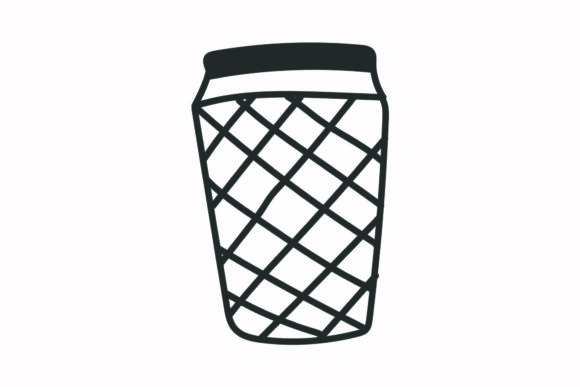
As a designer who’s digitized and stitched over 300 embroidery projects for Etsy sellers, boutique brands, and custom gift shops, I opened Coffee expecting something simple—and got something quietly capable. This isn’t a flashy, over-detailed illustration. It’s a clean, centered coffee cup vector with gentle curves, open negative space, and just enough contour to read clearly at medium sizes. The mood? Calm, approachable, handmade—not corporate, not cartoonish. It feels like the kind of design you’d embroider on a linen tea towel for a friend’s baby shower or stitch onto an organic cotton tote for your small shop’s launch.
First Impressions: What This Design *Actually* Wants to Be
Coffee reads as an Illustrations-grade graphic—not a photorealistic rendering, not a line-art sketch, but a balanced middle ground. The cup shape is generous and stable, with soft rounded handles and subtle steam lines that don’t compete for attention. There’s no text, no background clutter, no tiny decorative flourishes that would vanish under thread. That’s intentional—and smart. It means Coffee scales well across product types without needing heavy redesign. I immediately pictured it on a heavyweight cotton apron (center chest), a loop-back sweatshirt (left chest), or even as a standalone embroidered patch for a barista’s cap.
Where It Shines in Real Embroidery Projects
- Custom apparel: On midweight sweatshirts and unisex tees, Coffee holds its shape beautifully—even at 3.5" wide. The open cup interior leaves room for satin-stitch fill or even light applique if you want texture.
- Tote bag design: Stitched at 4–4.5" on natural canvas, it reads cleanly from across a farmers’ market stall. No detail gets lost in fabric weave.
- Baby embroidery: Used on a gauzy muslin swaddle or a knit onesie (with lightweight stabilizer), the simplicity avoids bulk while keeping charm intact.
- Holiday embroidery & personalized gifts: Paired with a minimalist “Merry” or “Brew Joy” script in a separate file, Coffee becomes a cohesive holiday set—no clashing visual weight.
- Commercial embroidery & craft business use: Because it’s offered in AI, EPS, SVG, JPG, and Transparent PNG at 1980×1280 px, it adapts smoothly into mockups, digital listings, and vector-based digitizing workflows.
Where to Pause—and Test First
This isn’t a one-size-fits-all embroidery file. Its strength is clarity—but that also means it won’t hide flaws in execution. Here’s where real-world caution matters:
- Small hoop sizes (under 3"): The cup’s proportions start to feel cramped below 2.75". Steam lines blur; handle definition softens. Best avoided for 2" caps or tiny baby bibs unless simplified.
- Textured or stretchy fabric: On terry cloth towels or ribbed knits, stitch density needs adjustment. Too dense, and the cup looks stiff; too sparse, and edges fray visually. Always test on scrap first.
- Dark fabric: The transparent PNG helps, but remember: embroidery thread color contrast—not just the file’s transparency—makes or breaks legibility. Try it in cream or oat thread on navy canvas before committing.
- Curved surfaces (like caps): The symmetrical layout works, but avoid placing it near the crown seam. The handle can distort slightly on high-curve areas without proper hooping and stabilizer support.
- Frequent-wash items: As a Graphics-based vector, Coffee gives you full control over stitch type—but don’t default to heavy fill stitch on kitchen towels. A balanced mix of satin + running stitch keeps it durable and breathable.
What It Adds to Your Finished Product—Beyond the Stitch
Used thoughtfully, Coffee lifts perceived value—not by being fancy, but by feeling intentional. Customers notice when a design breathes. When the cup isn’t fighting the fabric, when the steam reads as motion instead of noise, when the whole thing looks like it belongs—not stamped on, but made for—the item. That builds trust. For an Etsy seller, that translates to better photos, fewer “Is this embroidered or printed?” questions, and repeat buyers who recognize your quiet consistency.
It also supports brand cohesion. Whether you’re building a café-themed line, a wellness-focused gift shop, or a cozy nursery collection, Coffee slots in without shouting. It doesn’t demand attention—it invites it. And in handmade product markets, that subtlety is often what separates “nice” from “I need this.”
Practical Designer Notes Before You Stitch
- Always test on scrap fabric—same weight, same stabilizer, same thread colors you’ll use on the final piece.
- Check stitch density in your embroidery software. If the original file came as a raster image (JPG/PNG), digitize with moderate fill density—especially in the cup base—to prevent puckering.
- Confirm hoop size compatibility before digitizing or sending to machine. The 1980×1280 px canvas is generous, but your physical hoop may require scaling.
- Inspect small details at 200% zoom: steam ends, handle curve junctions, rim thickness. These are where digitizing errors or low-res exports cause trouble.
- Test black-and-white mockups—not just color. Does it hold up on dark fabric previews? Does it read clearly in grayscale thumbnails for your Etsy listing?
- Use proper stabilizer: cutaway for knits, tear-away for stable wovens, fusible for lightweight linens.
- Verify licensing before selling finished items or bundling Coffee into digital embroidery kits. Since the description says “for your decoration,” confirm whether commercial resale of stitched products is permitted.
In short: Coffee is a grounded, flexible, and quietly confident design—not a trend-chaser, but a reliable collaborator. It won’t dazzle with complexity, but it will deliver clarity, warmth, and quiet professionalism across dozens of real embroidery projects. Just meet it halfway: know your fabric, respect your hoop, and let the simplicity do the work.